
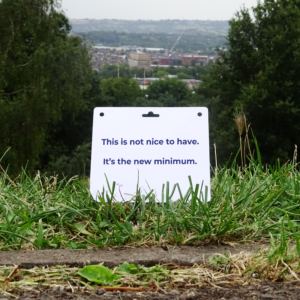
Sustainability is no longer an optional extra in the events industry – it’s an expectation. It’s part of how events are assessed by attendees, sponsors and procurement teams alike. From materials to suppliers, expectations have shifted. Modern audiences increasingly prioritise environmental responsibility when choosing events, and industry data shows organisers must adapt or risk falling behind. This piece explores why sustainability is now the new minimum, and what organisations can do to meet rising expectations without overwhelming their teams.

How delegate expectations are evolving
Attendees increasingly view sustainability as a core element of event quality and credibility. Recent industry research shows that 68% of event attendees support banning single‑use plastics at events, indicating strong environmental expectations (WifiTalents). A further 44% say they are more likely to revisit events that demonstrate environmental responsibility, linking sustainability directly to loyalty and repeat attendance. A clear signal that sustainability affects loyalty and repeat attendance (WifiTalents).
Beyond materials alone, modern delegates also prioritise transparency and ethical practices, placing sustainability alongside inclusion and accessibility in decision‑making when assessing an event’s values (cimunity.com).
For event organisers, this means sustainability must be woven into planning from the outset, not added as an afterthought.
“Audiences don’t just notice sustainability — they expect it. It’s part of what defines a credible event today.”
Roland Hunter, Director of Hunter Operations
Sustainability as a standard in event planning
In the events industry, sustainability is now deeply embedded in planning priorities and delivery. Surveys of professionals show that 73% of organisers prioritise sustainability in their event strategies, translating environmental responsibility into operational decisions (WifiTalents). Additionally, 65% of event professionals see sustainability as key to audience engagement, reinforcing its importance beyond environmental impact alone (WifiTalents). While earlier studies found sustainability ranking low amidst budget and content pressures, recent trends suggest a realignment, where responsible practices shape attendee engagement, brand reputation and competitive advantage.
Embedding sustainable choices, from materials to waste management, signals intent and aligns event planning with current market expectations.
“Sustainability isn’t a checklist — it’s part of what makes events relevant and resilient.” Roland Hunter.
This Is Not the Future – It’s What’s Needed Now
Event sustainability is no longer an emerging trend. It is now actively shaping how events are planned, evaluated and funded. A substantial majority of event professionals recognise the importance of sustainable practices and are integrating them into core planning decisions (WifiTalents).
Attendee expectations, sponsor interest, and environmental risk considerations all converge to make sustainability a present‑day priority. The industry shift is reflected in growing support for eco‑friendly operations and measurable engagement with sustainability metrics.
Support for lower-impact operations is growing, sustainability metrics are being measured more closely, and accountability is increasing. Organisers don’t need perfect answers, but they do need to act. The expectation is progress, not promises.
How industries are adapting event sustainability strategies
Across sectors, sustainability is being absorbed into everyday event planning. Organisations are adopting hybrid formats to widen access and lower carbon footprints, responding to delegate preferences for lower‑impact participation, responding to growing demand for lower-impact ways to participate (ResearchGate). Event professionals and venues increasingly prioritise sustainability certifications, waste reduction strategies and material reuse as part of their standard operating procedures. Ensuring sustainability is integrated into venue selection, procurement and attendee experience is no longer rare, it’s becoming common practice.
What stands out is how routine this has become. Sustainability is now considered during venue selection, procurement and the attendee experience, not treated as a separate initiative. These shifts point to a structural change in how events are planned, delivered and evaluated.
How to future-proof your materials
Staying ahead doesn’t require sweeping change. It means proactive choices, not reactive responses. It starts with looking closely at the materials you already use and asking where better choices are possible.
Practical steps follow naturally: cutting out single-use plastics, choosing materials that can be recycled or reused, and partnering with suppliers who are clear about their environmental practices. Just as important is communication. Explaining your sustainability decisions transparently helps attendees understand the intent behind them and builds confidence in how your event is run. By prioritising sustainability early, event teams minimise last‑minute pressure and demonstrate leadership.
Your next step: three actions you can take today
- Review what you already use
Start with your existing materials and processes. Small changes, such as choosing recycled print stock, often deliver immediate improvements without adding complexity. - Communicate clearly
Make your decisions visible. Tell attendees what you’re doing and why; clear communication builds trust. - Partner wisely
Choose suppliers and venues that take environmental responsibility seriously. Shared standards make sustainable planning easier and more consistent. Data shows that early adoption not only reduces environmental impact but also enhances engagement and loyalty (WifiTalents).
Taken together, these steps can reduce environmental impact while strengthening engagement and loyalty, an increasingly valuable combination in a competitive events landscape.
Sustainability isn’t optional, it’s essential. With rising attendee expectations and industry adoption, responsible event practices are the new baseline. By embracing sustainability now, organisations demonstrate leadership, build trust and ensure their events remain relevant.