Print with purpose: Aligning with sustainability goals
Traditional print processes often rely on virgin paper, petroleum‑based inks and plastic laminates that often become landfill waste. Sustainable alternatives are increasingly accessible: post‑consumer recycled paper, FSC‑certified stocks from responsibly managed forests, and plant‑based and water‑based inks reduce environmental harm and improve recyclability. Compostable coatings and biodegradable substrates can go a step further, keeping some items out of landfill altogether without sacrificing print quality.
Choosing low-waste event printing can be as simple as picking materials that align what you’re trying to achieve and ensuring the things people pick up, wear, and read at your event reinforce the values you’re communicating, is a stronger sustainability initiative than surface-level claims alone. These options can be used for name badges, lanyards, wristbands and other printed event materials with minimal trade‑offs. Using better materials results in better outcomes.
“Smarter print shouldn’t be a compromise — it’s an intentional choice that shows you mean what you say.”
Roland Hunter
Circular design: Designing for reuse and recycling
Single-use print is often created without a clear end in mind. Programmes are read once, badges are worn for a day, and signage is dismantled at breakdown. Without planning for what happens next, even well-intentioned materials can end up as waste.
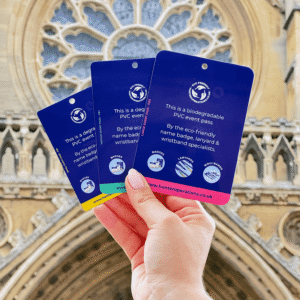
A circular design approach means considering a print item’s lifecycle from creation to disposal. Research suggests up to 90% of event waste is technically recyclable or compostable if you procure the right materials (WifiTalents). How printed items are designed, used and disposed of matters just as much as material choice.
The key is eliminating coatings and mixed materials that make recycling difficult, and choosing formats that can be reused or composted. Design choices like biodegradable papers and inks, smaller print runs to avoid overproduction, and on‑site recycling stations, dramatically lower the waste sent to landfill. Clear labelling and simple instructions also make a difference, helping attendees understand what can be returned, recycled or composted. Planning print with waste in mind keeps materials in the reuse cycle and reduces your event’s environmental footprint.
When circular design is built in from the start, print becomes part of a wider waste-reduction strategy rather than a disposal problem to solve afterwards. It reduces waste volumes, improves recovery rates and makes sustainability visible in practical, everyday ways.
The carbon cost of traditional vs sustainable print
The print industry historically accounted for about 1% of global carbon emissions, with significant contributions from paper production, ink formulation and waste disposal. (PaperCut). Making more responsible print choices yields measurable benefits. Using recycled paper, for example, can use around 30% less energy than producing virgin stock, conserving resources and cutting associated emissions.
Events generate high volumes of material waste, yet research suggests that up to 50% of this waste could be avoided through better waste management practices, including more considered print procurement (WifiTalents). When organisers use digital alternatives or select recyclable/compostable materials, waste decreases and attendee perceptions improve.
Choosing low‑impact print is a decision that generates measurable environmental return, and a step towards event sustainability that audiences increasingly expect and respond positively to.
Print doesn’t need to be part of the waste problem; low-waste event printing is about designing every badge, sign and handout to reduce landfill while strengthening the sustainability story your event tells. With recycled stock, compostable inks and thoughtful design, it becomes a low‑waste strategy that supports sustainability goals while reinforcing brand values. Smart print choices reduce landfill and carbon as well as showing audiences you’re serious about your sustainability commitment.